
War Criminals
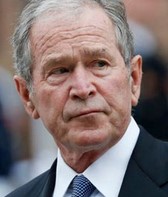
George W. Bush is a former American politician and businessman who served as the 43rd President of the United States from 2001 to 2009. He was born on July 6, 1946, in New Haven, Connecticut, and grew up in Texas. Bush attended Yale University, where he earned a Bachelor of Arts degree in history, and then went on to earn a Master of Business Administration degree from Harvard Business School.
Before entering politics, Bush worked in the oil and gas industry and served as the managing partner of the Texas Rangers baseball team. He was elected governor of Texas in 1994 and was re-elected in 1998.
Bush was elected President of the United States in 2000, defeating Democratic nominee Al Gore in a highly controversial election that was ultimately decided by the Supreme Court. During his presidency, Bush oversaw significant events such as the 9/11 terrorist attacks, the wars in Afghanistan and Iraq, and the global financial crisis of 2008.
Bush was also known for his domestic policies, including the No Child Left Behind Act, which aimed to improve education in the United States, and the Medicare Prescription Drug, Improvement, and Modernization Act, which expanded Medicare to include prescription drug coverage.
After leaving office in 2009, Bush returned to private life and has since focused on his philanthropic work. He has also become known for his paintings, which have been exhibited in galleries and published in a book.
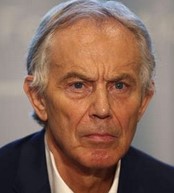
Tony Blair is a former British politician who served as the Prime Minister of the United Kingdom from 1997 to 2007. He was born on May 6, 1953, in Edinburgh, Scotland, and grew up in Durham, England. Blair attended Oxford University, where he earned a degree in Jurisprudence.
Blair was elected to the British Parliament in 1983, representing the Labour Party. He rose through the ranks of the party, eventually becoming its leader in 1994. Blair led the Labour Party to a landslide victory in the 1997 general election, ending 18 years of Conservative Party rule.
During his time as Prime Minister, Blair oversaw a number of significant events and reforms in the UK, including the implementation of the Good Friday Agreement, which helped to bring an end to the conflict in Northern Ireland, and the introduction of the minimum wage.
Blair's foreign policy was also notable, particularly his decision to support the United States in the invasion of Iraq in 2003. This decision was controversial and led to widespread protests in the UK and criticism of Blair's leadership.
Blair resigned as Prime Minister in 2007 and was succeeded by Gordon Brown. Since leaving office, Blair has focused on his philanthropic work, including his Tony Blair Institute for Global Change, which works to promote democracy and good governance around the world.
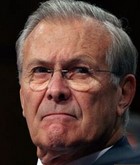
Donald Rumsfeld was an American politician and businessman who served as the 13th and 21st Secretary of Defense under Presidents Gerald Ford and George W. Bush, respectively. He was born on July 9, 1932, in Evanston, Illinois, and grew up in Illinois and New Jersey.
Rumsfeld began his career in politics in the 1960s, serving as a U.S. Congressman from Illinois and then as the Director of the Office of Economic Opportunity under President Richard Nixon. In 1975, he was appointed Secretary of Defense by President Ford, making him the youngest person ever to hold the position at the time.
After leaving government service, Rumsfeld worked in the private sector, including as the CEO of the pharmaceutical company G.D. Searle & Company. He returned to government service in 2001 when he was appointed Secretary of Defense by President George W. Bush.
Rumsfeld's tenure as Secretary of Defense during the Bush administration was marked by the 9/11 terrorist attacks, the wars in Afghanistan and Iraq, and controversies surrounding the treatment of detainees in U.S. custody. Rumsfeld was a strong advocate for the Iraq War and the concept of "shock and awe" military strategy, which aimed to use overwhelming force to quickly defeat enemy forces.
Rumsfeld resigned as Secretary of Defense in 2006, after growing criticism of his leadership and handling of the wars in Afghanistan and Iraq. He passed away on June 30, 2021, at the age of 88.
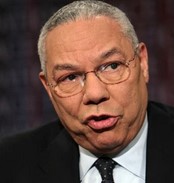
Colin Powell is a retired four-star general in the United States Army who served as the 65th United States Secretary of State under President George W. Bush from 2001 to 2005. He was born on April 5, 1937, in Harlem, New York City, and grew up in the South Bronx.
Powell began his military career in 1958 and served in a variety of command and staff positions, including as National Security Advisor to President Ronald Reagan and as Chairman of the Joint Chiefs of Staff under Presidents George H. W. Bush and Bill Clinton. He played a key role in the Persian Gulf War and was widely respected for his leadership and strategic thinking.
After retiring from the military in 1993, Powell became involved in business and served on several corporate boards. In 2001, he was appointed Secretary of State by President George W. Bush. In this role, Powell played a key role in the U.S. response to the 9/11 terrorist attacks and in building international support for the U.S. invasion of Afghanistan. However, he later became a vocal critic of the Bush administration's decision to invade Iraq, which was based in part on faulty intelligence about weapons of mass destruction.
Powell resigned as Secretary of State in 2005, and he has since been involved in various philanthropic and public service activities. He has been recognized for his leadership and service with numerous awards and honors, including the Presidential Medal of Freedom and the Congressional Gold Medal.
There are differing opinions on Colin Powell's role in the wars in Afghanistan and Iraq and whether he should be considered a war criminal. Some critics argue that Powell played a key role in promoting the false intelligence that was used to justify the U.S. invasion of Iraq in 2003, which resulted in the deaths of hundreds of thousands of people and destabilized the region. They argue that he knowingly misled the United Nations and the American people about Iraq's alleged possession of weapons of mass destruction.
Others argue that Powell was a respected military leader who was put in a difficult position by the Bush administration and did his best to serve his country. They point out that he later expressed regret for his role in promoting the Iraq War and called it a "blot" on his record.
It is important to note that the question of whether Powell is a war criminal is a matter of interpretation and opinion. Ultimately, it is up to individuals to form their own judgments based on the available evidence and arguments.
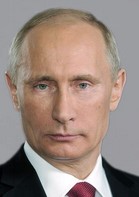
Vladimir Putin is the current President of the Russian Federation, having served as either President or Prime Minister since 1999. He was born on October 7, 1952, in Leningrad (now St. Petersburg), Russia.
Putin began his career in the KGB, the Soviet Union's security agency, and served as a foreign intelligence officer in East Germany in the 1980s. After the collapse of the Soviet Union, he entered politics and served as the head of the Federal Security Service (FSB) and as Prime Minister under President Boris Yeltsin.
Putin was first elected President of Russia in 2000 and was reelected in 2004 and 2012. He has been a controversial figure, with critics accusing him of authoritarianism, human rights abuses, and suppressing political opposition. He has also been accused of interfering in the 2016 U.S. presidential election and other elections around the world.
Despite the controversies surrounding his rule, Putin remains popular in Russia, and he has pursued a foreign policy aimed at reasserting Russia's role as a major global power. He has been involved in conflicts in Ukraine and Syria, and has sought to strengthen ties with China and other countries.
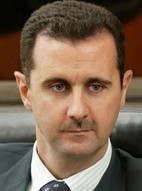
Bashar al-Assad is the current President of Syria, having taken office in 2000 following the death of his father, Hafez al-Assad. He was born on September 11, 1965, in Damascus, Syria.
Assad came to power amid promises of reform and modernization, but his rule has been marked by authoritarianism, repression of political opposition, and human rights abuses. In 2011, protests erupted in Syria as part of the Arab Spring movement, demanding greater political freedoms and reforms. Assad responded with a crackdown, leading to a civil war that has lasted for more than a decade.
Assad's regime has been accused of using chemical weapons against civilians, targeting hospitals and schools, and committing war crimes and crimes against humanity. The conflict has resulted in the deaths of hundreds of thousands of people, and millions have been displaced from their homes.
Assad has been supported by Russia and Iran, who have provided military and financial assistance, while the United States and other Western countries have called for his removal from power. Despite numerous diplomatic efforts to end the conflict, the war in Syria continues, with Assad's regime still in power in much of the country.