
Reports



ITM Trading Inc Wall Street vs the FED either way, you lose!
Noch immer keine Rezession?
Wie ich 2022 erklärte, war die viel diskutierte und ausstehende Rezession schon damals vorhanden, ungeachtet offizieller Versuche, selbige umzudefinieren.
Die tausenden Entlassungen bei Google, Amazon und selbst Goldman Sachs im Jahr 2023 könnten beispielsweise als Indiz dafür gelten.
Apropos Rezession: Mit erbärmlichen -32,9 Punkten verdichtete der Empire Manufacturing Report die Annahme, dass unsere zunehmend bewegungsunfähiger gemachte Wirtschaft auch nicht mehr durch Produktivität und Wachstum gerettet werden kann.
Tatsächlich hat es seit 2008 und 2020 keine so schlechten Zahlen mehr aus dem verarbeitenden Gewerbe gegeben; das waren, wenn ich richtig erinnere, ziemlich schlimme Marktjahrgänge – die sich nur noch mit Geldschöpfung im Warp-Tempo „retten“ ließen.
Und das wirft natürlich sofort die krampfhafte Frage auf, ob sich Fed-Chef Powell gezwungen sehen wird, die verzweifelte Mausklickgeldschöpfung wieder hochzufahren – sprich: „quantitative Lockerungen“.
Bislang geht die US-Notenbank klar in die entgegengesetzte Richtung – ihre Bilanzwerte werden „gestrafft“ anstatt „gelockert“ und das im Umfang von -95 Mrd. $ pro Monat und im Umfeld eines sich abzeichnenden perfekten Sturms.
Wie wir unten sehen werden, ist diese Lose-Lose-Option nur eine der vielen versteckten Minen, die unter dem ohnehin schon hinkenden US-Staatsanleihemarkt liegen.
Unterdessen verblöden die Blöden einfach weiter.
US-Staatsanleihen: Sicherer Hafen oder Minenfeld?
Die meisten Investoren, die spüren, dass eine Rezession im Anmarsch ist, tun das, was die meisten Investoren in schlechten Zeit tun: Sie treffen schlechte Entscheidungen.
Zentraler Punkt bei diesen schlechten Entscheidungen ist die traditionelle Flucht in langlaufenden US-Staatsanleihen – der sichere Hafen, wenn Märkte und Wirtschaften abtauchen.
Ich behaupte nun, dass jener traditionelle Fluchthafen heute eher einer Todesfalle ähnelt.
Warum?
Nun, die Antworten finden sich in ungeschönten Fakten und simpler Mathematik – zwei Themenbereiche, die unsere politischen Entscheidungsträger seit Langem schon bewusst canceln, leugnen oder ignorieren.
Rechnen wir’s also aus. Ganz einfach 1, 2 und 3.
Die simple Mathematik des US-Anleihesterbens
- Staatsdefizite — Landmine Nummer 1
In den schmerzvollen Jahren 2008 und 2020 stiegen die US-Defizite, prozentual zum BIP, um 8 % bzw. 10 %.
Immerhin braucht es in schlechten Zeiten mehr Schulden-„Akkommodierung“ – also mehr Defizitfinanzierung und steigende Wachstumsraten bei der Verschuldung.
Auf dem Weg ins neue Jahr 2023 hatte die jährliche „Burn Rate“ des Staates schon 1,5 Bill. $ erreicht, was nicht nur erbärmlich, sondern auch gefährlich ist.
Leider legt harte Mathematik nah, dass sich diese Zahl auch im Jahr 2023 weiter verschlechtern wird.
Und zwar ganz deutlich.
Zieht man die vorgehenden Defizitwachstumsquoten (800 und 1.000 bsp) für die Jahre 2008 bzw. 2020 heran, so könnte sich 2023 rechnerisch eine staatliche Defizit-Burn-Rate von 2 Bill. $ bis 2,6 Bill. $ ergeben. Konservativ gerechnet, kommen die USA für 2023 somit auf ein US-Staatsdefizit zwischen 3,5 Bill. $ und 4 Bill. $.
Doch das ist nur der Anfang.
- Mehr QE, Mehr Defizit-Belastung: Landmine Nummer 2
Wenn wir dann noch die laufenden monetären Straffungsmaßnahmen (QT) von -95 Mrd. $ monatlich draufsatteln, kämen wir mit unseren Defizitberechnungen für 2023 zuerst in die Nähe der 5 Bill. $-Marke und dann darüber hinaus.
Das setzt natürlich voraus, dass Powell keine Kehrtwende in seinem QT-Krieg gegen die Inflation macht. Wie mein letzter Bericht objektiv bestätigte, birgt dieser Krieg auch das Risiko, dass die US-Märkte und -Wirtschaft so stark absacken, wie wir es seit… ja… vor 1871 nicht mehr beobachten konnten.
- Ausland stößt Uncle Sams Schuldtitel ab: Landmine Nummer 3
Der wachsende Mangel an Vertrauen und Interesse an US-Treasury-Anleihen verschärft das Problem und die Mathematik dieser tickenden Zeitbomber nur weiter.
Wie ich das gesamte Jahr 2022 über erklärt hatte, war Powells/ Yellens kurzsichtige wie auch einseitige Politik der Zinserhöhungen und Dollarstärkung der absolute Tiefschlag für ausländische Währungen und Wirtschaften.
Wie schon die Sanktionen gegen Putin ging auch diese Maßnahme – also der Versuch, ausländisches Geld in den Markt für US-Staatsanleihen zu locken – nach hinten los.
Die Schwellen- und Industrienationen (von BRICS bis Japan) sehen sich vielmehr gezwungen, UST-Bestände abzustoßen (zu verkaufen), um die eigenen Währungen zu verteidigen gegen die ansonsten drangsalierende und untragbare USD-Aufwertung.
Mit Blick auf all diese Faktoren kann es ohne Weiteres sein, dass ausländische Anleihehalter im Jahr 2023 zusätzlich 1 Bill. $ in US-Staatsanleihen abstoßen, die das wachsende US-Defizit spürbar in die Höhe treiben würden. Somit könnte eine Defizitmarke von 6 Bill. $ bis Jahresende überschritten sein.
Man kann es sich ausrechnen
Ein solcher Nettoabsatz von US-Schuldtiteln würde wohl auch bedeuten, dass das Angebot an US-Schuldtitel deren Nachfrage deutlich übersteigen wird.
Aus dem Wirtschaftsunterricht in der Schule weiß man, dass ein derartiges Ungleichgewicht zwischen Angebot und Nachfrage zu einem massiven Preisverfall führt.
Anders formuliert: Wenn die Anleiherenditen wie nahende Haiflossen aufsteigen, werden US-Staatsanleihen wie Newtons Apfel fallen.
Welchen Sinn haben US-Staatsanleihen noch für Sie?
Hinsichtlich der eingangs gestellten Frage, ob die traditionelle Flucht in langlaufende US-Staatstitel – also die Flucht in den „safe haven“ – unter den aktuellen Gegebenheiten eigentlich Sinn macht, lassen sich die Antworten inzwischen einfacher sortieren.
Kurz: Die Notwendigkeit einer drastischen Ausweitung des UST-Angebots zur US-Defizitdeckung steht im krassen Widerstreit mit der Tatsache, dass natürliche und ausländische Nachfrage nach jenen Schuldtiteln einfach nicht mehr da ist…
Solange diese Schuldscheine nicht einfach mit Mausklickgeld aufgekauft werden und Powells sogenannter Krieg gegen die Inflation sich nicht in eine QE-Politik der extremen Inflation verkehrt…
Ahhh. Ironien an allen Ecken und Enden. Powell steht ganz einfach nur mit dem Rücken zur Wand. Seine Optionen sind furchtbar.
Entweder strafft er und zerstört damit Märkte und Otto-Normal-Verbraucher, oder er lockert und zerstört den USD mit einem inflationären Hurrikan.
Mit Blick auf den aktuellen politischen Kurs und die laufenden Trends lässt sich vom mathematischen Standpunkt aus mit einiger Sicherheit behaupten: Wer auf langlaufende UST setzt, schleicht sich eher auf Zehenspitzen durch ein Minenfeld, als dass er in einen „Sicheren Hafen“ einsegelt.
Allen gegenteiligen offiziellen Narrativen zum Trotz ist meine Sicht (wie auch schon im Jahr 2022) unverändert geblieben: Die aktuellen Wachstumsraten und Ertragskurven legen nah, dass wir uns schon jetzt in einer Rezession befinden; sobald diese Rezession offiziell wird (Bekanntgabe ist immer nachläufig), gibt es noch mehr US-Staatsschuldenemission und noch mehr Minus bei den Anleihepreisen.
Der USD und Gold
Was den USD und dessen Auswirkungen auf den Dollar-basierten Goldpreis angeht, habe ich 2022 durchweg argumentiert, dass ein starker USD ein deutliches Hemmnis für Gold sei.
Ich hatte zudem sehr oft argumentiert, dass ein derart starker USD kein nachhaltiger Ansatz sei und zwar aus dem einfachen Grund, weil steigende Verschuldung, steigende Zinssätze und ein steigender Währungswert kein nachhaltiges Trio ergeben.
Angesichts der oben diskutierten Defizitstände und angesichts der Tatsache, dass die USA jährlich 2,9 Bill. $ für Leistungsberechtigungen zahlt aber auch 900 Mrd. $ an ihren militärisch-industriellen Komplex/ Führung abgibt, ist es schlichtweg nicht möglich, dass die USA ihre Dollarstärke-Politik fortführen, ohne dabei einen regelrechten Schuldenausfall zu riskieren.
Da Schuldenausfälle aber politischem Selbstmord gleichkommen und Störungen in den globalen Kredit- und Bankensystemen verursachen, wie es sie seit dem 2. Weltkrieg nicht mehr gegeben hat, ist es weitaus wahrscheinlicher, dass die US-Notenbank, die offenbar mehr wirtschaftspolitische Richtlinienkompetenz hat als das Weiße Haus, letztendlich mehr „Liquidität“ fordern wird, um Uncle Sams ansonsten ungewollte aber vermehrt emittierte Staatsschulden aufzukaufen.
Wie biegt man Inflation gerade? Einfach lügen.
Was das Thema inflationäre Belastungen und den schrittweisen Sieg von Gold über ebendiese Belastungen angeht, haben unsere genialen politischen Entscheidungsträger eine einfache wie bekannte Lösung parat: Ganz einfach lügen!
Wie der ehemaliger Finanzminister und frühere Präsident der Europäischen Kommission, Jean-Claude Junker, in einem berühmt gewordenen Ausspruch eingestand: „Wenn es ernst wird, muss man lügen.“
Was die Lügen der Obrigkeit angeht, ist ihre empirische Anhäufung über die Jahre betrachtet kein Mythos sondern Fakt.
Von Arbeitslosenquoten bis Verbraucherpreisindexdaten oder von systemischer Deformierung durch Zentralbanken nebst Digitalwährungen über Ex-Items-Bilanzierungsbetrug, Medienfiktionen zur viralen Wissenschaft bis hin zur Neudefinition einer Rezession – die wachsende Menge an Fantasieprodukten, die als Tagesrealität durchgehen, scheint ein Hinweis darauf zu sein, dass die Lage in der Tat „ernst“ wird.
Mit anderen Worten: Die Lügen türmen sich im Einklang mit wachsender finanzieller Verzweiflung auf.
Trotz aller ernsten Probleme haben die jüngst vorgenommenen Veränderungen an der Berechnungsmethodik des ohnehin schon unehrlichen US-Verbraucherpreisindex (CPI) fast schon komische Züge – oder zumindest tragikomische Züge.
Seit Jahren weise ich auf Folgendes hin: Wenn die US-Notenbank öffentlich den Kampf gegen die Inflation beschwört und gleichzeitig die Inflation selbst ausnutzt (und die negativen Realzinsen), um damit die historischen Verschuldungsstände „wegzuinflationieren“, dann ist das eine Schliche und der unehrliche Versuch, „alles auf einmal haben zu können“.
Sprich: Für die Schlagzeilen kann das Powell-Lager 1.) hinsichtlich der tatsächlichen Inflation lügen (sie falsch darstellen) und gleichzeitig 2.) auch von allen Vorteile profitieren, die mit versteckter/ geleugneter Inflation kommen – also einer Inflation, in ihrer Präsenz und (so meine ich) Tendenz zur Stagflation, keineswegs „vorübergehend“ sein wird, wovor ich, schon lange bevor Powell diesen Begriff (Lüge) erfand, gewarnt hatte.
Was die für den nächsten Monat anstehenden Änderungen an der CPI-Methodik angeht, haben die Inflationsbelletristen im US-Amt für Arbeitsmarktstatistik (also dem BLS oder kurz „Office of BS“) sich entschieden, die Gewichtung der „Owners’ Equivalent Rent“ (kurz “OER”, Ermittlung von vergleichbaren Mietkosten, die ein Hauseigentümer zahlen müsste) neu anzupassen.
Die offiziellen Zahlen: Nie richtig, aber auch nie falsch
Neben anderen Tricks will das „Office of BS“ inzwischen die aus Nachbarschaftsbefragungen ermittelten Vergleichsmieten für ein Kalenderjahr ansetzen, um deren erhebliche Auswirkung auf die Inflationsquoten des US-Verbraucherpreisindex (CPI) praktisch auf unehrlich niedriger Stände manipulieren zu können.
Besonders heftig dabei ist: Die hier verwendete CPI-Messmethode (rote Kurve unten) ist ohnehin schon berüchtigt dafür, dass sie – im Vergleich zur alten Inflationsmessung der Volcker-Ära (blaue Kurve unten) – die tatsächliche Inflation um 50 % zu niedrig angibt.
Solche Lügen sind gewissermaßen nie richtig, aber als offizielle Datenpunkte der US-Regierung sind sie eben auch nie falsch.
Die große Frage mit Blick auf die Zukunft ist dann recht einfach: Wird die Lüge funktionieren?
Die Inflationsdaten des US Office of BS ist im Grunde wie ein Thermometer, das dem Kranken eine gesunde Temperatur verspricht, wenngleich dieser buchstäblich brennt – bei 39,5 Grad Fieber, Nachtschweiß und Gliederschmerzen.
Solche Tricks sind Türöffner für Powell, die es ihm sogar erlauben würden, wieder vermehrt auf inflationäre Geldschöpfung zurückzugreifen, ohne dabei inflationäre Schlagzeilen riskieren zu müssen, schließlich sagt uns die Verbraucherpreisentwicklung ja, dass sich die „Datenlage“ verbessert – wenngleich die Verbraucherausgaben buchstäblich brennen wie hohes Fieber mit Nachtschweiß und Gliederschmerzen.
Stellen Sie sich doch einfach selbst die Frage: Scheinen die Lebenshaltungskosten (USA) tatsächlich um 6,5 % zu steigen, oder fühlt sich dieses „Fieber“ nicht doch ein wenig höher an, als gesagt wird?
Gold: Ein besserer Fluchthafen?
Mit Blick auf alle vorgebrachten Argumente muss jeder Einzelne von uns sich die Frage stellen, wo der eigene sichere Hafen zu finden ist – in Zeiten ausgedehnter Kriege, unehrlicher Mathematik, umdefinierter Rezessionen, Anleihesterben, Währungsentwertung und flattriger Aktienmärkte, die merklich nach Süden tendieren.
Natürlich galten risikofreie Renditen von Staatsanleihen, insbesondere von US-Staatsanleihen, dabei traditionell als die sicherste Wette.
Doch auf Grundlage von 1.) nicht-traditioneller und, aus meiner Sicht, kompletter Verzerrung/ Zerstörung der globalen Anleihemärkte aufgrund jahrelanger kriminell nachlässiger Geldpolitiken von Tokio bis Washington DC und 2.) der tatsächlichen, realen Rendite von US-Schuldtiteln (in Abgrenzung zur offiziellen, also inflationsbereinigten) tritt immer deutlicher hervor, dass jene „risikofreien Rendite“ kaum mehr ist als renditefreies Risiko.
Deswegen werden informierte Investoren, die willens sind, ein paar Extraminuten darauf zu verwenden, grundlegende Anleihemarktgeschichte und -Mathematik zu verstehen, bald schon erkennen, dass selbst … jawohl… die 0%-Rendite von Gold – mit ihrem natürlich begrenzten Stock-to-Flow-Verhältnis (d.h. einer nahezu „begrenzten“ Jahresproduktion von kaum einmal 2 %) sowie einer unbegrenzten Laufzeit – deutlich besser zur Vermögenssicherung geeignet ist, als Anleihen mit begrenzter Laufzeit und scheinbar unbegrenzter Auflagezahl…
Haben Sie schon Gold?
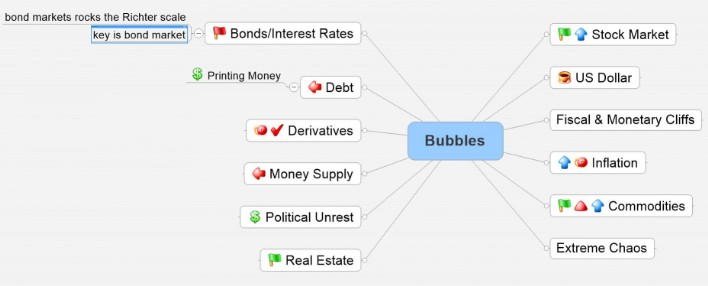



Who knows more about protecting and accumulating wealth than the 1 %
Do you think it's just a coincidence that global Central Banks and the 1% are accumulating gold and all at the same time?






Via SchiffGold.com,
Billionaire hedge fund manager John Paulson said you’re better off owning gold than dollars.
Why?
Because he thinks the dollar is set up for long-term depreciation as the world drifts toward dedollarisation.
Paulson talked about the dedollarisation trend in an interview with journalist Alain Elkann.
Paulson said the trend is toward dedollarisation, but it will take a while to happen. While the US isn’t the economic powerhouse it once was, it remains dominant in terms of reserves and trade. But other countries, particularly China, have undercut America’s economic power. That is eroding the power of the once-mighty greenback.
Other countries do not want to rely on the dollar as much as they have in the past, and the US also has an enormous deficit with the rest of the world in terms of trade and investment balances that used to be very positive, but now it’s very negative. That points to the intermediate and long-term depreciation of the dollar versus other currencies.”
He also noted that the extraordinary amount of money printing by the Federal Reserve has also undercut faith in the US dollar.
A lot of our growth has been based on fiscal spending that has been financed by the Fed buying the debt of government. The Fed balance sheet has exploded due to ‘quantitative easing’, a polite way of saying ‘money printing’, and inflation resulted. If you had dollars and 9% inflation, this year you lost 9% of your money; interest rates were nowhere close to compensating for that loss.”
With this backdrop, a lot of investors and central banks are looking for an alternative to the dollar. As a result, Paulson said, “gold is rising again.”
I say again because it’s been the reserve currency of the world for thousands of years, a legitimate alternative to holding the dollar or other paper currencies. There has been a significant increase in demand from central banks to replace dollars with gold, and we’re just at the beginning of that trend. Gold will go up and the dollar will go down, so you’d be better off keeping your investment reserves in gold at this point.”
Paulson isn’t merely speculating. Central bank gold buying set a record in 2022.
But why gold and not some other currency, such as the Swiss franc or the euro?
The other currencies will likely rise in value against the dollar, but each has their own issues. The European Central Bank (ECB) has also printed a significant amount of money, and if you keep your money in fiat currencies you face the risk, due to geopolitical events, that your reserves can be seized. As the central banks did with Russia. China probably think that as they have so much of their reserves in dollars, if they get into a geopolitical spat with the Western world over Taiwan or something else there is a possibility these reserves will be frozen, like they did with Russia.”
You avoid that counterparty risk when you hold gold.
If you possess physical gold you don’t face that risk. You also have the potential for appreciation. We’re at the beginning of trends that are going to increase the demand for gold, and inflation and geopolitical tensions will determine the rate at which gold increases. This year gold will appreciate versus the dollar, and also over a three, five and 10-year basis.

Three is the Charm?
Mike Savage
In our current financial system, the US dollar has unofficially defaulted twice. First, in 1971 the US dollar was divorced from its backing with gold- basically defaulting on our promise to the rest of the world to have the dollar be as “good as gold”. This led, over time, to the second unofficial default in 2008 when the only way to stop the implosion of the entire financial system (as we were told and so it seemed) was to conjure up tens of trillions of dollars from nowhere and hundreds of trillions of currency units (also from nowhere) to pretend that we still had a system where we could still fund our debts with productive income. This, however, was just a clever ruse to prop up asset values and buy time. The real story is that, since then, we have been like a family that just keeps running up another credit card to pay off the last one and also opening up and maxing out new ones over and over again.
Buy time it did! Far more time than I could have imagined especially since the act of “printing up money” is obviously inflationary and on top of that each round of new “stimulus” has to be larger than the last to get the same results.
There have been many signs that the system was breaking down like in 2008 when $16 TRILLION was funneled to the banks and again in 2019 when $9 Trillion was again funneled to the banks- long before anyone had ever heard of the virus. Of course, we now also have the Fed (and probably other central banks also) doing repos and reverse repos to pretend that there is a lot more liquidity out there than there actually is. This likely leads the algorithms to BUY and raise asset prices. How much repo are they doing? Try around 2 TRILLION every night and setting records month after month.
It should be pretty obvious that the Fed, like many public companies, have 2 sets of books- the one for public consumption and the other “official” book. The signs here are, if you go to the Fed’s website, it appears they are shrinking their balance sheet. This doesn’t jive with the fact that they have to be purchasing hundreds of billions in government debt to keep rates suppressed. It is also interesting that Jerome Powell, in his latest speech, said specifically that the Fed is not going to sell securities- even though “officially” they don’t buy stocks even though they have a trading desk- I guess it’s just for show!
This has gone on for so long and inflation appeared to be tame for many years after this illusion started that many are sure that the powers that be will work this all out. Call me skeptical. There are many reasons why I believe we are getting VERY near the end of this long road.
- We have been conjuring up “money” to buy bonds to manipulate rates which manipulates almost all prices. This has led to NO PRICE DISCOVERY in the bond and stock “markets” for years. The level of mispricing of ALL assets cannot be overstated.
- We have been issuing new debt to pay interest on old debt and retire some old debt. In the past we had “help” from our trading partners like China, Japan and Saudi Arabia that would help purchase a lot of this debt. Recently they have become net sellers- not buyers. This leads me to believe that the Fed has to be picking up the slack- likely in the trillions.
- While the economy is imploding the “markets” are not. This disconnect is most likely a result of central banks and their friends buying it all and preventing the “market” from doing its one job of discovering the correct price for each asset. If this is true HOW could the Fed’s balance sheet possibly be shrinking? It couldn’t. This also gives me a reason to remember the $40 TRILLION plus that Dr. Mark Skidmore from Michigan State University has discovered spent but not accounted for. My guess- propping up assets in the shadow banking system where there is no oversight and no regulation.
- The constant manipulation and conjuring up cash out of nowhere (which also creates NOTHING of value) except to give the extraordinary privilege to a few to get “something for nothing”. Of course, anyone with half a brain knows that there is NEVER something for nothing- someone always pays. That would be me, you and all the citizens under this system.
- It is becoming pretty obvious that the current trajectory is leading to tremendous instability as the “HAVES” are flaunting their wealth and power while those who were struggling before are finding it hard to survive today because of the inflation we are seeing. There are riots taking place globally- many violent- that are being ignored by our mainstream media. Almost all of the civil unrest taking place is because of rising prices and the inability for many to keep the lifestyle they are accustomed to at best and not being able to afford the necessities of life at worst.
- I believe we are at a point right now where the very act of “printing up money” is becoming the disease rather than the cure. The central banks seem to have two choices #1 Protect the Currency (this could lead to an implosion of asset prices) or #2 Protect asset prices (this could lead to an implosion in the purchasing power of our dollar). I don’t believe there is a way to do both- even though they are pretending they believe they can. Many call this “Maximum Saturation” where the level of debt becomes so onerous that inflation gets out of control and the life’s work of most people gets wiped out. This tends to happen slowly at first, pick up steam and then … wham! All at once. Don’t be surprised because all the signs are here.
- A few weeks ago a video was released of an FDIC meeting where they discussed a market meltdown and bank runs and how they could prepare without alerting the public. What do THEY know that we don’t? I’d be worried too if I had $200 Billion insuring $9 TRILLION!
- The lies are becoming far more apparent. Inflation is too high so- even though they massage the numbers to make them around 50% less than our inflation in reality- they are discussing CHANGING the way they report CPI- AGAIN! 4% unemployment? NOPE! 7% Inflation- I wish! That would be far better than what we are living. Gold and silver demand is off the charts- and the price drops? That’s called fraud if you or I were to do it but manipulation if those “in charge” pull it off while buying record amounts for themselves. .What do THEY know that you don’t?
- A couple of quotes from Gerald Celente “When people lose it all-they lose it!” See riots around the world. “When all else fails they take you to war” To me, there appears to be no reason to fight Russia or anyone else for that matter. It would be better for everyone if we traded with each other and were to show mutual respect rather than being the world’s bullies to get our way. We are not dealing with Sadaam Hussein or others who really couldn’t fight back. Hopefully an adult will arise and put an end to this nonsense before we have FAR more to worry about than our investments.
If all of this seems nonsensical to you it is because it is. It is to further an agenda and it is not likely good for any of us regular people who just want to live in peace and have a little happiness and hopefully some prosperity.
It is my opinion that this current monetary system is on its last legs and will be replaced -as advertised by the BIS (Central bank of central banks) so that the CBDCs can be rolled out by 2025. To me, this suggests that a crisis of some sort is needed in the next 6-18 months. This is likely the reason for central banks buying record amounts of gold year after year. 2022 was an all-time record. It appears to me that the third “unofficial” default will come shortly and usher in the end of our fiat illusion.
BE PREPARED!
Any opinions are those of Mike Savage and not necessarily of those of RJFS or Raymond James. Expressions of opinion are as of this date and are subject to change without notice. The information in this report does not purport to be a complete description of securities, markets or developments referred to in this material. The information has been obtained from sources deemed to be reliable but we do not guarantee that the foregoing material is accurate or complete. Any information is not a complete summary or statement of all available data necessary for making an investment decision and does not constitute a recommendation. There is no guarantee that these statements, opinions or forecasts provided herein will prove to be correct.
Commodities are generally considered speculative because of the significant potential for investment loss. Commodities are volatile investments and should only be a small part of a diversified portfolio. There may be sharp price fluctuations even during periods when prices are overall rising.
Precious Metals, including gold, are subject to special risks including but not limited to: price may be subject to wide fluctuation, the market is relatively limited, the sources are concentrated in countries that have the potential for instability and the market is unregulated.
Diversification does not ensure gains nor protect against loss. Companies mentioned are being provided for information purposes only and is not a complete description, nor is it a recommendation. Investing involves risk regardless of strategy.